

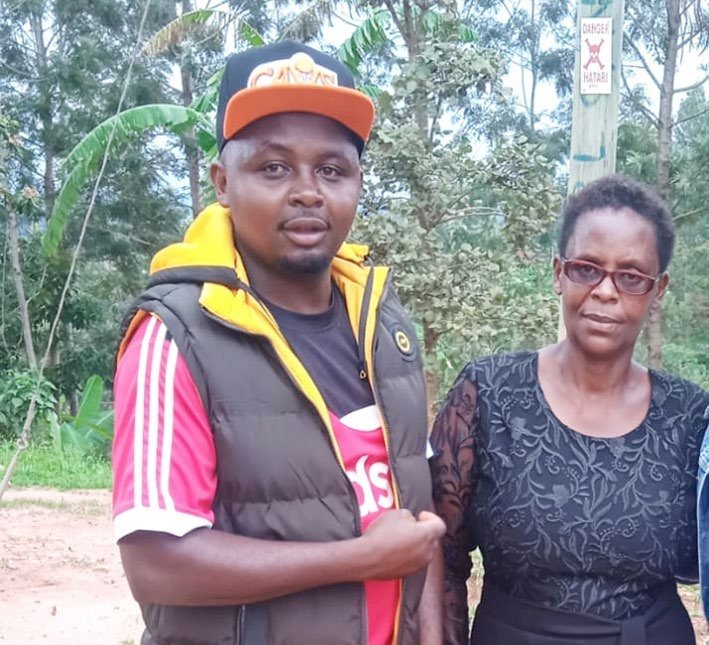
On the morning of 27 December 2025, two days after his 32nd birthday, Charles Waithaka1 called his mother from somewhere inside Russia.2 He was crying. He kept repeating the same broken phrase – “Mum… today… Mum… today…” – and could not finish the sentence. The call ended. Bibiana Wangari Waithaka would never hear her son’s voice again.
In the weeks that followed, she sent him messages every day.
Good morning.
Good afternoon.
Good evening.
Good night. There was no reply.
Charles had left Kenya three months earlier. A woman had arranged what she said was a job opportunity as a plant mechanic in Russia, the kind of work he already knew. Within days of arriving, he told his mother he had not been placed in mechanical work but instead put into military training and forced to sign documents he could not read. During one call, he was crying. “Mum, I am in military training against my will.” A few days before his birthday, he sent her a photograph showing his eyes swollen. Then a message: “My birthday is the sunrise, but sunset may come first.” When she asked what he meant, he told her that by sunset, he meant death.
On 24 January 2026, Bibiana learned that her son was dead. She didn’t find out from any embassy or official government call. She found out through social media. As she laments, “The whole world knew that my son was dead before his own mother did.”
His body was never returned to Kenya. The family held a memorial without his remains. Somewhere, his mother said, her son lies in a place she does not know and has never seen.
Charles did not leave Kenya to fight in a war. Like thousands of other young African men before and since, he left his motherland to find work.
“The whole world knew that my son was dead before his own mother did.”
Bibiana
1 JFJ interview with Bibiana Wangari Waithaka, mother of Charles Waithaka Wangari, conducted in Nairobi, February 2026. All quotations attributed to Bibiana in the Prologue and throughout this report are drawn from this interview unless otherwise noted.


