

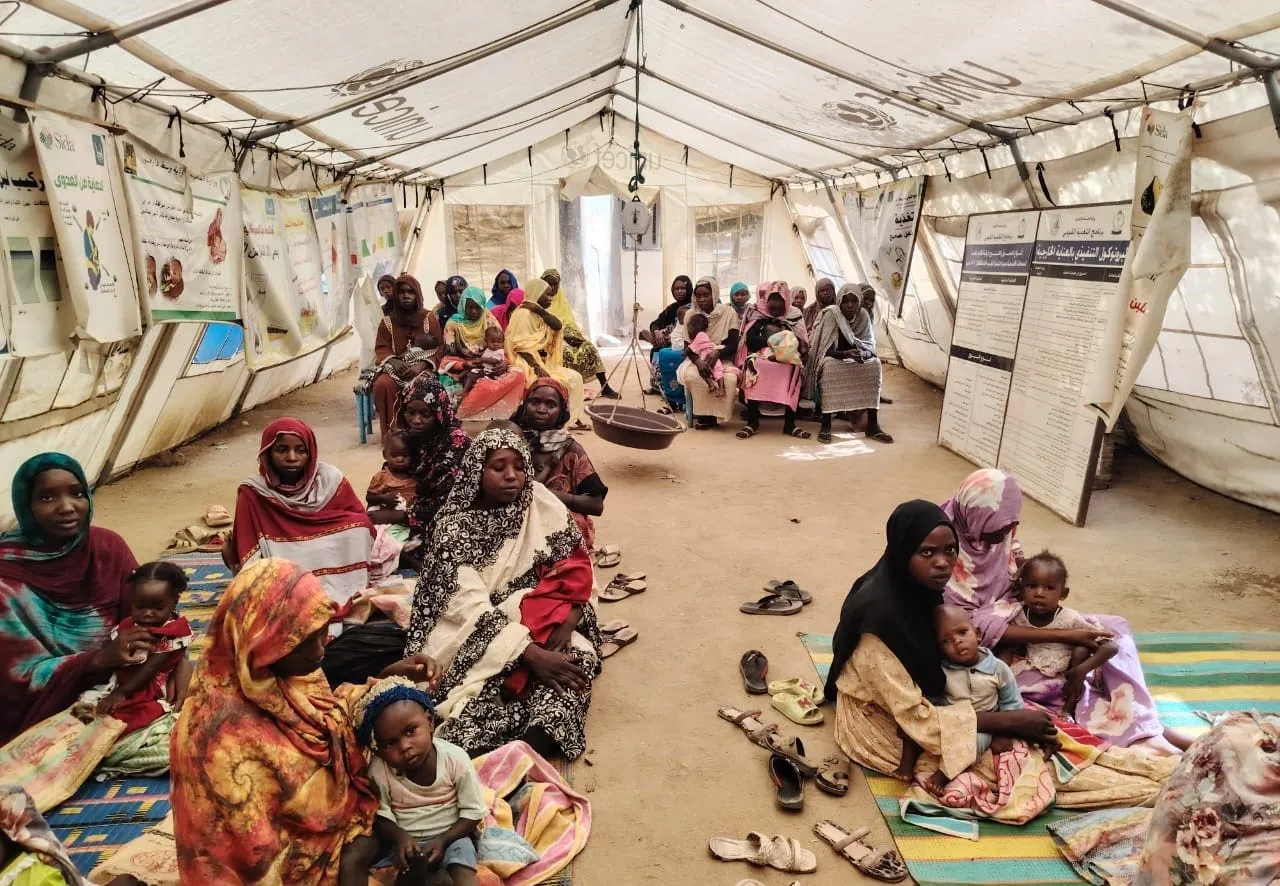
Across the Horn of Africa and East Africa, civilians are suffering some of the most severe human rights violations in recent memory. Armed conflict, repression, and unchecked abuses have devastated families and communities. The Human Rights Watch (HRW) World Report 2026 and other verified documentation paint a stark picture of civilian suffering, while survivors’ voices reveal the deeper human impact behind the headlines.
Sudan: Civilian lives shattered by war
The conflict in Sudan, between the national Sudanese Armed Forces (SAF) and the rebel Rapid Support Forces (RSF), continues to be characterised by widespread violence against civilians. Millions have been forced from their homes as fighting spreads across urban and rural areas. Human Rights Watch reports repeated attacks on civilian infrastructure, indiscriminate shelling, and restrictions on humanitarian aid. The report warns that “widespread laws of war violations with rampant impunity are taking place in Sudan.”
Nowhere has this been more visible than in Darfur.
Darfur, already infamous for the violence that erupted in 2003 when government-backed Janjaweed militias launched a brutal campaign against non-Arab communities, has long symbolised the mass atrocities that have become common on the African continent. The conflict killed an estimated 300,000 people and displaced more than 2.5 million, according to the United Nations Office for the Coordination of Humanitarian Affairs (OCHA). The scale and nature of the abuses, widespread killings, systematic rape, forced displacement, and the destruction of entire villages, prompted the International Criminal Court (ICC) in 2009 and 2010 to issue arrest warrants for then-President Omar al Bashir, accusing him of war crimes, crimes against humanity, and genocide.
Several senior officials in his administration, including militia leader Ali Muhammad Ali Abdi-Al-Rahman “Ali Kushayb” and former ministers Ahmed Haroun and Abdel Raheem Hussein, were also indicted for their roles in the Darfur atrocities. In December 2025, the ICC sentenced Abdi-Al-Rahman to 20 years in prison after convicting him of murder, torture, rape, and outrages upon personal dignity – crimes committed between 2003 and 2004.
The region is engulfed yet again in a conflict that reignited in April 2023 and has produced a pattern of abuses that rights groups describe as systematic and targeted. Witness accounts collected by rights monitors and verified media describe killings, looting, and abductions during RSF raids. In one widely reported incident, civilians said RSF fighters killed parents and abducted children around El Fasher, telling families the children would be used as livestock herders. In interviews conducted by Amnesty International researchers in December 2025, survivors described witnessing groups of men shot or beaten and taken hostage for ransom. Female survivors narrated how they were subjected to sexual violence, as were some of their daughters.
HRW and UN investigators have also documented serious violations by the SAF. The national army has conducted indiscriminate airstrikes in Khartoum, Omdurman, South Darfur, and the Kordofans, hitting residential areas, markets, and medical facilities. In Darfur, SAF used unguided air-dropped bombs in Nyala and north of El Fasher, killing scores of civilians in February and March 2024. SAF-allied groups, including the Sudan Shield Forces, have also been implicated in ethnically targeted killings, such as the January 10, 2024, attack in Tayba village that left at least 26 civilians dead. SAF authorities have further carried out arbitrary detentions, especially of people accused of collaborating with the RSF, often along ethnic lines. These patterns form part of a clear record of violations of international humanitarian law attributed to SAF and its allied forces.
HRW documented mass violence in the West Darfur town of Misterei, where nearly 100 civilians were killed in a swift assault that destroyed homes and burned entire neighbourhoods. Most of the victims were Masalit civilians, underscoring the ethnic dimension of the violence. The Masalit are a minority ethnic group mostly found in West Darfur and especially in areas like El Geneina, where they have historically had a large presence and deep cultural roots. They are one of several non‑Arab ethnic minorities in Sudan, including the Fur and Zaghawa.
The Masalit have suffered repeated violence and targeted attacks over many decades, including the early Darfur conflict starting in 2003, during which government forces allied with Janjaweed militias targeted the non‑Arab communities with killings, village destruction, and mass displacement. In the latest conflict, the Masalit have been specifically and repeatedly targeted and have suffered systematic killing of civilians, rape, torture, destruction of neighbourhoods, and forced displacement. HRW has described the attacks as ethnic cleansing while several governments and organisations have termed them genocide.
ALSO READ: Ali Kushayb sent to jail for 20 Years, but Darfur victims still waiting for justice
Alongside killings and abductions, medical networks and rights groups have reported the widespread use of sexual violence. Sudanese media organisation Ayin Network has documented dozens of cases of rape involving women and girls who fled RSF-controlled areas, showing that attacks continued even as civilians attempted to escape.
The outlet also reported individual accounts that reflect the desperation inside besieged Darfur cities. One resident, using a pseudonym for safety, said RSF gunmen arrested him and held him for ransom as families attempted to flee El Fasher. His relatives circulated a video showing him bruised and visibly exhausted as he pleaded for help to secure his release. Kidnapping for ransom has become common, adding another layer of suffering to communities already devastated by the conflict.
International human rights lawyer Stella Ndirangu said the scale of sexual violence emerging from Darfur reflects a pattern of “unimaginable trauma” that women and girls continue to carry in silence. She recalled the story of a woman from El Geneina, in West Darfur, who lost a child while fleeing an attack and was forced to leave the body as she walked for days toward the Chad border with her remaining children. She later began volunteering at safe houses in Chad, helping other survivors to process their trauma.
“Sudanese women are incredibly resilient,” Ndirangu said. “But the question is whether they should have to endure such horrors for that resilience to be seen.”
She added that the silence from many survivors is not a reflection of unwillingness to speak, but of fear and stigma. Even in asylum countries, she said, women worry about reprisals because fighters linked to the warring parties have infiltrated refugee communities. Others choose not to disclose the assaults they have suffered because of deep social stigma or because they fled alongside their husbands and fear further destabilising their families.
The lawyer said the collapse of Sudan’s health system has left women exposed to preventable medical complications, including untreated injuries, infections, and unwanted pregnancies.
“For survivors who remain inside Sudan, the lack of emergency care is like a death sentence,” Ndirangu said, warning that the health crisis is compounding the psychological and physical toll of the conflict.
Beyond individual testimonies, Ayin Network’s Sudan Conflict Monitor, a regular briefing and analysis series on the ongoing war in Sudan, has documented patterns of extrajudicial executions, mass graves, enforced disappearances, and torture. Many of these violations take place in schools, homes and displacement camps, showing a deep erosion of civilian protection under international law.
DRC: Survivors speak out
In eastern Democratic Republic of the Congo (DRC), decades of conflict continue to fuel grave abuses. HRW has documented repeated cases of conflict-related sexual violence in Ituri, North Kivu, and South Kivu. HRW notes that “armed groups and military forces are using sexual violence as a weapon of war.”
Survivor accounts highlight the impact of these abuses. In a village near Djugu territory, a survivor said that fighters ambushed civilians and attacked women. “The fighters beat us, saying, ‘You Hema think you are too clever. Now you will see.’” She described being raped at gunpoint while six months pregnant, leaving her with lasting trauma.
Another survivor told HRW that armed men attacked her village and presented her with an impossible choice. “Two fighters told me to choose between being killed and being raped,” she said. Afterwards, she walked for three days through dangerous territory to reach medical care in Bunia, arriving too late to access emergency treatment that could have prevented pregnancy or HIV infection. The UN reported 152 cases of sexual violence directly linked to “M23 elements” in 2024.
These stories reflect a broader pattern of violence in eastern DRC, where competing armed groups and national forces continue to commit abuses with little accountability.
Eastern DRC has long been plagued by insecurity, with the key actors being the M23 rebels, supported by the Rwandan Defence Force (RDF), the Allied Democratic Forces (ADF), a Ugandan rebel group linked to the Islamic State, and the Forces Démocratiques de Libération du Rwanda (FDLR), a Rwandan-based militia.
A 2025 report by the UK parliament, the House of Commons, stated that local militias such as Wazalendo support the Congolese national army (FARDC) in fighting the M23, while foreign troops from Burundi, Malawi, South Africa, and Tanzania have been deployed as part of regional and UN peacekeeping missions. Eastern DRC remains rich in resources such as cobalt, tantalum, and diamonds, and competition over these minerals, along with political rivalries and land disputes, has fuelled cycles of violence.
READ ALSO: Peace efforts without justice for victims will not stop future conflict in DRC
The conflict has intensified in recent years, with the capture of Goma by M23 and allied forces in January 2025 resulting in the deaths of several UN and regional peacekeepers, including 14 from South Africa. In February 2025, M23 advanced on Bukavu, heightening fears of a wider regional war. Civilians have borne the brunt of the violence, facing killings, displacement, and widespread human rights abuses. As UN High Commissioner for Human Rights Volker Türk noted, the absence of state authority has enabled “brutal levels of violence and attacks”.
HRW reported that M23 rebels killed at least 140 civilians in July 2025 in North Kivu. Other reports for the same period indicate that the death toll in specific areas, such as Binza, may have exceeded 300, with most victims being local farmers.
South Sudan: A fragile peace with persistent harm
South Sudan, the world’s youngest nation, continues to struggle with cycles of conflict that have displaced millions and left communities vulnerable to new atrocities. HRW reports that intercommunal violence, clashes between armed groups, and abuses by security forces are widespread. Conflict-related sexual violence remains a major concern, yet “few perpetrators have been brought to justice.”
Peace agreements, including the revitalised 2018 deal, have failed to stabilise the country. Delays in implementing political, security, and transitional justice measures have left large parts of Unity, Upper Nile, and Jonglei states experiencing ongoing insecurity.
South Sudan’s current instability has deep roots in its long struggle for autonomy and the cycle of conflict that followed its independence from Sudan in 2011. Before secession, the region had endured decades of war with the north, culminating in the Comprehensive Peace Agreement of 2005, which ended the second Sudanese civil war and paved the way for independence. However, deep political and ethnic divisions persisted, especially between President Salva Kiir Mayardit, from the Dinka group, and his former deputy, Riek Machar, a leading figure of the Nuer community.
Although the 2013-2018 conflict formally ended with the 2018 peace agreement, the breakdown of the power-sharing deal between Kiir and Machar has reignited major hostilities. Tensions escalated sharply in March 2025, when Kiir placed Machar under house arrest, accusing him of inciting rebellion. By September 2025, Machar faced charges of treason, murder, and crimes against humanity, further collapsing the political settlement that had kept the fragile peace intact. The situation worsened as clashes resumed on multiple fronts, including the involvement of the White Army, a Nuer youth militia that overran national army barracks in Nasir, Upper Nile, in early 2025.
President Kiir’s decision to invite Ugandan troops back into the country in 2025 deepened regional tensions and sparked condemnation from the opposition, which called it a violation of existing peace accords. According to UN agencies, the renewed violence has had devastating humanitarian consequences: since late 2024, an estimated 397,000 more people have been displaced, bringing the total number of displaced South Sudanese to 4.3 million. Meanwhile, the war in neighbouring Sudan has disrupted vital oil pipelines, causing a 30 per cent economic contraction in 2025 and a fourfold increase in food prices, leaving roughly 10 million people, about 84 per cent of the population, in urgent need of humanitarian assistance amid warnings of an imminent famine.
HRW reports that South Sudan is experiencing its worst levels of food insecurity since its independence. Conflict, economic collapse, displacement, and flooding have sharply restricted access to food, healthcare, and education, leaving millions at risk of starvation.
Ethiopia: Continued suffering despite ceasefires
Although the large-scale Tigray conflict, which broke out in November 2020, has quietened down, serious abuses continue in Ethiopia’s conflict-affected regions.
HRW documented violations by government forces and allied militias in Amhara and Tigray, including attacks on civilians, unlawful killings claiming thousands of lives, displacement of millions, and widespread arrests under emergency proclamations. The Ethiopian government imposed a siege on Tigray, while local officials and Amhara militias in Western Tigray carried out an ethnic cleansing campaign against the Tigrayan population that human rights observers said amounted to crimes against humanity.
In November 2022, Ethiopian authorities and the Tigray People’s Liberation Front (TPLF) signed an African Union-brokered truce.
In 2024, HRW said the agreement’s monitoring mechanism failed to pay attention to continuing human rights abuses perpetrated by the warring parties against civilians in Tigray, in violation of pledges to protect ordinary people.
The 2026 HRW Report notes that “government forces and Fano militia in Ethiopia’s Amhara region committed war crimes and other serious abuses.”
Incidents documented include extrajudicial executions and unlawful killings, such as the January 29-30, 2024, massacre in Merawi where Ethiopian National Defence Force soldiers allegedly summarily killed dozens of civilians, as well as continued shelling, drone strikes, and attacks on civilians and aid workers. Government forces also arbitrarily arrested, tortured and detained civilians, health workers, and journalists, while Fano fighters were responsible for the killings of civilians and attacks on civilian objects.
HRW and other rights monitoring note that restrictions on civic space, media freedom, and political participation have intensified ahead of Ethiopia’s national elections, scheduled for June 2026. Authorities have targeted journalists and independent media outlets and sought legal measures to clamp down on rights organisations as part of this tightening of the political environment. The restrictions have included harassment, arbitrary arrests, and limitations on protests.
Tanzania and Uganda: Political repression and human rights concerns
In Tanzania, the October 2025 elections that re-elected President Samia Suluhu Hassan were marred by abuses and growing restrictions on political participation.
According to Amnesty International, security forces used unnecessary and disproportionate force, including lethal force, to suppress election protests between October 29 and November 3, 2025. They are reported to have used live ammunition and teargas on protesters and other individuals who posed no imminent threat of death or serious injury.
“The violence that security forces inflicted on protesters and other people who were just going about their daily lives was shocking and unacceptable, and yet another sign of growing intolerance in Tanzania,” Amnesty International’s Secretary General Agnès Callamard said.
A survivor told Amnesty that her husband was shot in Magomeni, Dar es Salaam, on October 29, and died two days later while receiving treatment.
“The police didn’t launch any teargas. They just used live bullets,” she said.
HRW reports that in the months leading up to the polls, opposition parties and critics faced a sustained campaign of intimidation, arbitrary arrests, violent attacks and enforced disappearance.
A high-profile example was the arrest of Tundu Lissu, a leader of the opposition Chadema party, on fabricated treason charges. The European Parliament condemned the arrest. Chadema was barred from participating in elections until 2030, while the ACT-Wazalendo party’s presidential candidate was blocked by the country’s National Electoral Commission from running.
READ: ICC renews hope for justice, accountability for victims of Kony’s brutal attacks
ICC renews hope for justice, accountability for victims of Kony’s brutal attacks
Media freedom also suffered. Authorities shut down over 80,000 websites and social media accounts, citing protection of children from harmful content, and restricted platforms, including X (formerly Twitter), Clubhouse, and Telegram.
Tanzanian regulators ordered the removal of a video in which Bishop Josephat Gwajima, a religious leader and politician, criticised the abductions targeting protesters, and suspended JamiiForums, the most influential homegrown social media platform, for 90 days, accusing it of “misleading” the public. The Forum is often called the “whistleblowers’ haven” because it allows users to remain anonymous while exposing corruption and government misconduct.
HRW documented a rise in abductions and attacks on critics, including the kidnapping of media owner Maria Sarungi Tsehai in Nairobi, the disappearance of activist Mpaluka “Mdude” Nyagali, and the attack on government critic Japhet Matarra. Since 2019, more than 200 cases of enforced disappearance of opposition supporters and rights defenders have been recorded.
According to HRW, indigenous Maasai communities in Ngorongoro are also under pressure to relocate from ancestral lands, and LGBTQ+ people continue to face criminalisation and threats under laws imposing life imprisonment for same-sex relations.
Across the border in Uganda, as HRW documents, the government has continued a crackdown on opposition figures, journalists, protesters, and environmental defenders.
Security forces have revived military tribunals for civilians, including opposition leader Kizza Besigye and at least 44 others. Human Rights Watch reports that freedom of expression and assembly came under repeated attack during the period before and after the January 15, 2026, elections.
University student Elson Tumwine was sentenced to two months in prison for a TikTok video criticising President Yoweri Museveni, while Tiktok creator Juma Musuuza received a 12-month prison sentence for sharing “malicious information”. Journalists covering opposition campaigns leading to the elections were beaten, including Ibrahim Miracle, who was struck in the face with a truncheon and nearly lost sight in one eye.
According to HRW, during the Kawempe North by-election, security forces beat supporters, fired live bullets, and detained 22 people. Media outlets reporting on vote-rigging, including Pearl FM, were suspended, while environmental activists protesting against the East African Crude Oil Pipeline were arrested, with some detained at Luzira Maximum Security Prison.
The Anti-Homosexuality Act of 2023 further fuelled violence and extortion against LGBTQ+ individuals.
The crackdowns in both Tanzania and Uganda illustrate how political repression, restrictions on civic space, and targeted abuses continue to undermine human rights across East Africa.
Kenya: Suppression of civic rights
In Kenya, Human Rights Watch documented the use of lethal force by the police during protests.
HRW reported cases in which security forces shot or injured protesters and bystanders. These incidents occurred amid growing concerns about shrinking civic space, especially during periods of political tension or economic protest.
The organisation notes that in 2025, the independent media, activists, human rights defenders and organisations, and government critics faced threats, intimidation, harassment, arbitrary arrest, and malicious prosecution.
A region at a crossroads: Holding abusers accountable
Survivor testimonies offer critical insights into the human cost of conflict in East Africa and the Horn of Africa. Whether from displacement camps in Sudan, villages in eastern DRC, or towns in Ethiopia, their accounts reveal a consistent pattern: civilians are repeatedly targeted, and those responsible rarely face justice.
Human rights defenders have urged regional governments, especially Kenya, and international bodies to strengthen accountability mechanisms, sanction abusive actors, and increase civilian protection.
Allan Ngari, the Africa Advocacy Director at Human Rights Watch, said Kenya holds a “unique position” within the United Nations Human Rights Council. Additionally, the country has formerly held a coordinating role in Geneva.
“Kenya can help shift the trajectory from cautious diplomacy to principled leadership grounded in human rights,” he said during the launch of the HRW World Report 2026 in Nairobi.
He warned that without sustained pressure and political will; cycles of impunity will continue to define conflicts across East Africa and the Horn of Africa.