

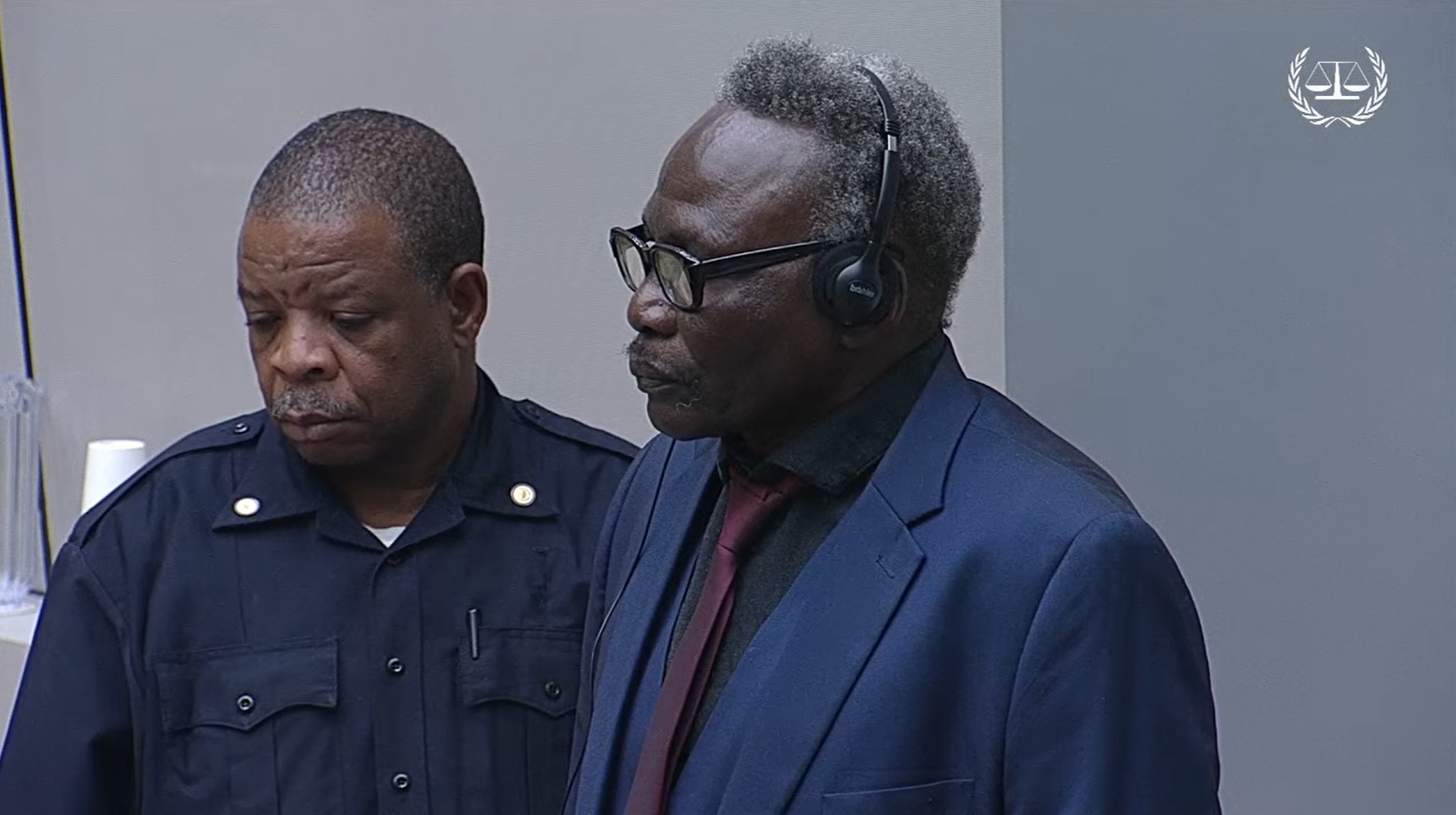
After the International Criminal Court’s sentencing of former Janjaweed leader Ali Muhammad Ali Abd-Al-Rahman, known as “Ali Kushayb”, for his role in the Darfur atrocities, attention now shifts to the court’s next great challenge: reparations for the victims of the violence and the apprehension of the other architects of the Darfur genocide.
For a long time, the trial was the only hope for justice for the thousands who suffered at the hands of the Janjaweed militia group, one of whose most brutal leaders was suspected to be Abd-Al-Rahman, because although four were indicted by the ICC, no one else has been arrested and brought before the court.
On December 9, 2025, the ICC sentenced Ali Kushyb to 20 years in prison, saying it was appropriate considering the gravity of the 27 counts he was convicted of two months ago, and balancing them with his personal circumstances and mitigating factors. He was found guilty of war crimes and crimes against humanity, which included murder, rape, torture, and persecution in 2003-2004.
Judges Joanna Korner (presiding) Reine Alapini-Gansou, and Althea Violet Alexis-Windsor, described the crimes as “exceptionally grave” and rejected most of the defence’s arguments that sought to reduce the sentence, noting that Abd-Al-Rahman had offered little to mitigate his responsibility.
The sentence fell short of the life imprisonment requested by the Office of the Prosecutor (OTP). In its sentencing response, the OTP cited the “extreme gravity” and “high level of cruelty and violence” of the crimes, noting the “large number of victims encompassing at least 213 murdered Darfuris, including children, and 16 women and girls who were victims of rape.”
Cases of extreme gravity
The prosecution had argued that Abd-Al-Rahman’s role as a direct perpetrator, co-perpetrator, and order-giver justified the maximum penalty.
The maximum penalty under the Rome Statute is 30 years, or life imprisonment for cases of extreme gravity. The chamber will deduct the time Abd-Al-Rahman has spent in custody since his voluntary surrender on June 9, 2020, from his total term.
“The Office will carefully review the written decision and determine whether to take further action,” the OTP said while reserving the right to appeal the sentence within the next 30 days.
But even as the Prosecution is pushing for the harshest possible sentence, the defence was already positioning itself for the next legal battle.
Led by Cyril Laucci, the defence had previously signalled that an appeal would likely be limited in scope, focusing squarely on the court’s findings regarding Abd-Al-Rahman’s alleged role and the evidence surrounding his nickname, “Ali Kushayb”, a matter he consistently argued was a case of mistaken identity.
In its sentencing decision, the ICC made clear that his long-standing claim of mistaken identity had no bearing on the punishment.
“The defence is in the process of studying with Mr Abd-Al-Rahman the opportunity and grounds of an eventual appeal, but I can already say that, in case there is an appeal, it will be limited to the chamber’s findings regarding the role allegedly played by Mr Abd-Al-Rahman, including under the alleged nickname Ali Kushayb,” Laucci said in an emailed statement in October after his client’s conviction.
He also said the defence intended to challenge “unresolved issues impacting on Mr Abd-Al-Rahman’s fair trial rights,” including the non-cooperation of Sudan and concerns over the prosecution’s disclosure obligations.
Urgent call for reparations
With the Defence outlining potential appeal grounds, the court has now opened the door to the long-awaited reparations phase.
It issued an order for submissions on reparations with a guiding timeline. For Darfuri victims who waited two decades for the conviction, Abd-Al-Rahman’s defence is pushing for swift action, arguing that reparations should begin immediately and not be halted by the appeal process.
“Reparations shall be addressed without waiting for the outcome of an appeal,” the defence insisted after the conviction.
Though unusual, this push came from Abd-Al-Rahman’s lawyers, who have repeatedly highlighted his “efforts to compensate victims.”
More than 1,500 victims are already recognised in the case, and the court has instructed all parties to move quickly, stressing that Darfur’s survivors “have waited long enough”.
“Victims have been waiting for too long… Now that their victimisation is confirmed by the final findings of the trial chamber’s October 6, 2025 decision, there is no point waiting for a final ruling on Mr Abd-Al-Rahman’s guilt to initiate reparations proceedings supported by the Trust Fund for Victims,” read the sentencing judgment.
The reparations phase, which will be shaped by submissions from the defence, victims’ lawyers, the Registry, and the Trust Fund for Victims, will determine how to redress the suffering of the thousands of men, women, and children targeted in the Janjaweeds’ scorched-earth campaign across Kodoom, Bindisi, Mukjar, and Deleig in 2003 and 2004.
But even as the court tries to repair past harms, Darfuris are once again facing mass violence involving the paramilitary Rapid Support Forces (RSF), a group with direct lineage to the Janjaweed militia, perpetrating new atrocities.
In El Geneina, West Darfur, in 2023, the RSF and allied militias carried out a campaign of ethnic cleansing against the Masalit and other non-Arab communities, reportedly killing thousands and forcing hundreds of thousands to flee into Chad.
More recently, in El Fasher, the capital of North Darfur, the RSF’s late-October 2025 takeover of the city was accompanied by credible reports of mass killings, widespread sexual violence, and the deliberate targeting of civilians, prompting the ICC to issue an urgent call for evidence.
“The office is working intensively on the investigation of recent events, in particular in El Geneina and El Fasher, to ensure that perpetrators face justice,” read the response from the OTP.
For the victims, the fight for justice is far from concluded. With four high-profile fugitives—including former President Omar al Bashir, wanted for genocide, and Abd-Al-Rahman’s superior, Ahmed Harun—still beyond the court’s reach, the 20-year sentence for the former militia leader serves as both a measure of long-awaited accountability and a renewed call for international cooperation to bring all the other suspects to The Hague.