

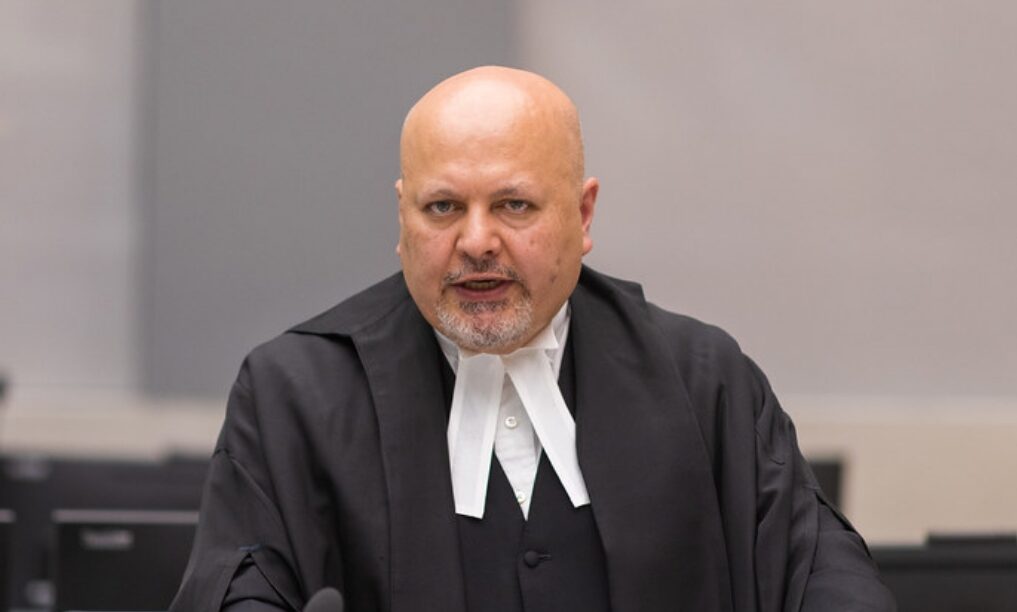
International Criminal Court (ICC) Prosecutor Karim Khan has been ousted from office after a majority of the members of the Assembly of States Parties (ASP), the court’s oversight body, voted to remove him for misconduct in connection with the sexual abuse case he has been battling for almost two years.
Some 82 of the 125 ASP members were in favour of removing the Prosecutor, 13 were against the proposal, and 15 abstained from the vote during the July 24, 2026 special meeting at the UN headquarters in New York.
Khan is now formally relieved of his duties as the chief prosecutor of the world’s only permanent international criminal court. He had voluntarily stepped aside in May 2025 to facilitate investigations into the allegations against him and was officially suspended by the Bureau of the ASP in June 2026, when it referred his disciplinary case to the assembly for a vote.
Khan’s exit opens up the process of appointing a new prosecutor only six years after Khan assumed office in June 2021 to start his nine-year tenure.
It had been widely expected that there would be two votes at the ASP, one on whether or not he had committed misconduct and the second on whether to remove him from office. In the end, the assembly decided to conduct only one vote.
This is the first time an ICC prosecutor has been removed from office and also the first time the ASP has exercised its disciplinary powers to do so, setting a significant precedent for institutional oversight and reinforcing the principle that even the court’s highest officials are subject to accountability.
The ASP derives its disciplinary authority from Article 46 of the Rome Statute, which provides that a prosecutor may be removed from office if he or she is found to have committed “serious misconduct or a serious breach of his or her duties under this Statute,” or is “unable to exercise the functions required by this Statute.” In the case of the Prosecutor, the decision must be taken “by an absolute majority of the states parties” following an opportunity for the prosecutor to present a defence.
The decision follows two years of scrutiny over allegations of sexual misconduct made against Khan by a staff member. He has repeatedly denied the allegations, maintaining that he committed no misconduct.
“I have consistently and unequivocally denied any sexual misconduct and any sexual relationship of any kind, consensual or otherwise, with the individual concerned. I repeat those denials and stand firmly that I have not committed any acts as alleged,” he said in reply to questions from Journalists For Justice (JFJ).
The vote marks an unprecedented moment in the court’s history. Never before has the ASP, the ICC’s management oversight and legislative body, been called upon to determine the future of a sitting prosecutor through its governance and disciplinary framework.
The proceedings revived a broader debate about whether political pressure, from governments, advocacy groups or media campaigns, should influence decisions affecting an independent prosecutor. Writing ahead of the ASP meeting on July 21, 2026, international criminal lawyer Michael Karnavas cautioned that institutional legitimacy depends on adherence to due process rather than competing pressure campaigns, arguing that “justice cannot be lobbied.”
“When outcome of disciplinary proceedings depends on lobbying, accountability becomes a matter of influence rather than of law,” he said.
From reformer to scrutiny
Karim Khan elicited high expectations when he assumed office as the ICC’s third prosecutor. A veteran British lawyer with decades of experience in international criminal law, Khan inherited an institution frequently criticised for the slow pace of investigations and prosecutions. He pledged to make the Office of the Prosecutor (OTP) more efficient, strengthen cooperation with States Parties, and place greater emphasis on delivering justice to victims.
During his tenure, the court accelerated investigations into atrocities committed in Ukraine, continued work in Darfur, and revived momentum in several long-running investigations. His office also sought and obtained arrest warrants for high-ranking officials in the Israeli government, including Prime Minister Benjamin Netanyahu, in relation to the war in Gaza. This attracted global attention and placed the court at the centre of geopolitical tensions.
READ ALSO: Process on trial: Inside ICC’s handling of Karim Khan case
The allegations of sexual misconduct against Khan first reached the court’s Independent Oversight Mechanism (IOM) on May 3, 2024, when a third party reported claims of harassment involving the prosecutor. According to the IOM’s annual report, the alleged victim declined to confirm or deny the allegations and did not file a formal complaint, leading the oversight body to refrain from opening an official investigation at that stage. Instead, it recommended undisclosed protective measures.
The allegations entered the public domain in October 2024, after anonymous social media accounts circulated details of the claims and identified the alleged victim.
On October 28, 2024, Khan formally requested that the IOM open an investigation into both the allegations and what he described as a campaign of disinformation targeting his office. He argued that the accusations had emerged amid broader attacks against the ICC following several politically sensitive investigations. He pledged to cooperate fully with any investigation while maintaining his innocence throughout the process.
Because the alleged victim had not lodged a formal complaint when first approached by the IOM in May 2024, the oversight body concluded it lacked sufficient grounds under its procedures to launch a formal investigation.
The ASP then commissioned an external investigation by the UN Office of Internal Oversight Services (OIOS) to ensure what the assembly’s President Päivi Kaukoranta described as a “fully independent, impartial and fair process” conducted under a victim-centred approach.
In May 2025, Khan took a temporary leave of absence while the inquiry proceeded, with the two deputy prosecutors assuming day-to-day leadership of the OTP. At the time, investigators interviewed witnesses, reviewed electronic communications, and examined evidence gathered over several months, collecting more than 5,000 pages of material. The OIOS submitted a 150-page report to the ASP President, who referred it to the 21-member Bureau of the assembly, the executive arm that assists it in discharging its responsibilities.
The investigation entered a new phase in March 2026, when an independent panel of three judges appointed by the ASP Bureau reviewed the findings to determine whether the facts established by the OIOS amounted to misconduct or a breach of duty under the applicable legal framework.
Judges Leona Theron of South Africa’s Constitutional Court, Paul Lemmens of Belgium, and Seymour Panton of Jamaica spent nearly three months reviewing the OIOS materials before announcing their conclusion on March 9, 2026. “The Panel is unanimously of the opinion that the factual findings by OIOS do not establish misconduct or breach of duty under the relevant legal framework,” they said.
However, the Bureau was not satisfied with the judicial review and reached a preliminary determination that the material warranted further examination. Over the following months, both Khan and the complainant were invited to submit further written observations and evidence while giving the alleged victim an opportunity to respond, before deciding whether disciplinary proceedings should be pursued. In June 2026, the Bureau formally announced that it had found that Khan had committed serious misconduct and suspended him from his duties as prosecutor. It also referred the matter to the ASP for disciplinary action.
READ MORE: Khan vows to fight on as his date with the ASP looms
What next
The OTP will continue to operate under the leadership of the two deputy prosecutors while the assembly begins the process of electing a new prosecutor. The Rome Statute provides in Article 42(4) that the Prosecutor is elected by secret ballot by an absolute majority of the ASP for a single, non-renewable nine-year term. Until that election is concluded, the deputy prosecutors are expected to continue managing investigations and prosecutions.