
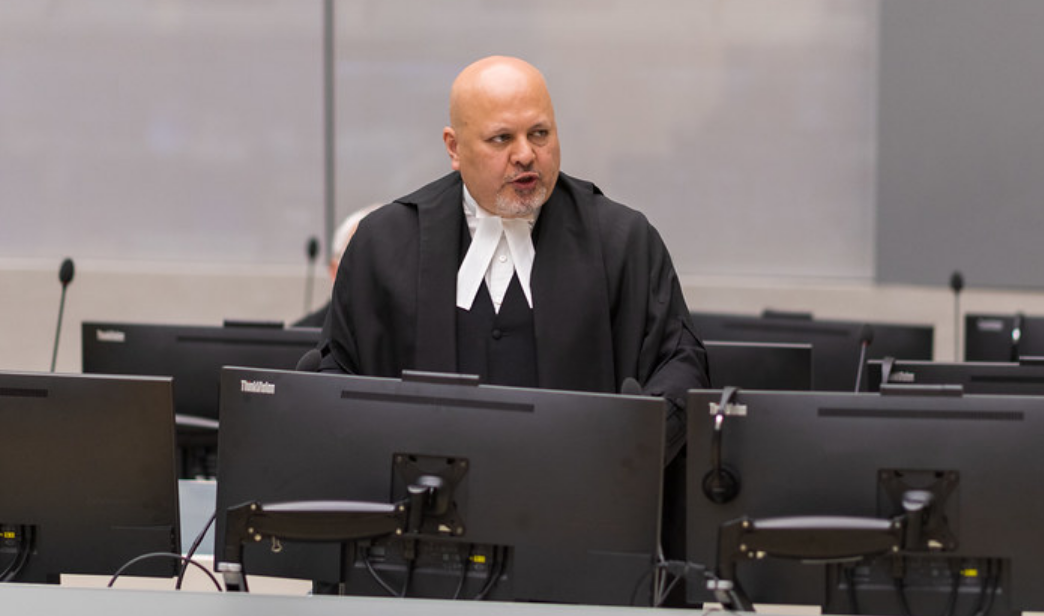
As the representatives of the 125-member Assembly of States Parties (ASP) convene to decide the fate of suspended International Criminal Court (ICC) Prosecutor Karim Khan following allegations of sexual misconduct, a growing number of lawyers, diplomats, and legal commentators are arguing that the equally consequential story may be the process that has brought the matter for the vote before the assembly at the United Nations (UN) headquarters in New York.
Many have raised questions about the process, terming it improvised, unprecedented, and hounded by leaks and political interference.
No specific ICC statute anticipates a sitting prosecutor being investigated for personal misconduct. When the allegations against Khan first surfaced publicly in late 2024, the President of the ASP, the ICC’s management oversight and legislative body, Päivi Kaukoranta, authorised an outsourced inquiry by the UN’s Office of Internal Oversight Services (OIOS) after the alleged victim declined to work with the ICC’s own internal watchdog, the Independent Oversight Mechanism (IOM). The OIOS was mandated to conduct an independent fact-finding investigation into the allegations against Khan.
The OIOS has no formal mandate under the Rome Statute, which establishes the ICC. Between November 2024 and December 2025, it interviewed Khan, the complainant, and other witnesses, gathering more than 5,000 pages of materials, before submitting a 150-page report to the ASP President, who referred it to the 21-member Bureau of the assembly, the executive arm that assists it in discharging its responsibilities. The Bureau appointed an independent panel of three judicial experts to determine whether the facts established by the OIOS amounted to misconduct or a breach of duty under the applicable legal framework.
Judges Leona Theron of South Africa’s Constitutional Court, Paul Lemmens of Belgium, and Seymour Panton of Jamaica spent nearly three months reviewing the OIOS materials before announcing their conclusion on March 9, 2026. “The Panel is unanimously of the opinion that the factual findings by OIOS do not establish misconduct or breach of duty under the relevant legal framework,” the three said.
Misconduct or breach of duty
The Bureau did not accept that conclusion. Weeks later, on April 1, a majority of its 21 members reached a preliminary determination that the material warranted further examination. The Bureau then invited Khan to submit further written observations and evidence while giving the alleged victim an opportunity to respond, before deciding whether disciplinary proceedings should be pursued.
In June, the Bureau formally announced that it had found that Khan, who had stepped aside in May 2025, had committed serious misconduct and suspended him from his duties as Prosecutor. It also referred the matter to the ASP for disciplinary action.
Critics of the process flag this split – an external body being authorised to establish the facts of the case, an independent judicial panel giving a legal opinion that the Bureau, which appointed it, was free to disregard, and a political body issuing the operative decision – as procedural anomalies.
Sir James Eadie KC, one of the UK’s leading advocates, had warned the Bureau in a private legal opinion submitted in November 2025 that the structure itself was flawed. In an exclusive piece, the Middle East Eye (MEE) stated that in a 21-page document, Eadie said the investigators should have confined themselves to “simply collating and recording what may appear from documents and who said what”, leaving the actual determination of facts to the judges. “It would be entirely inappropriate in principle for the investigator (in effect the prosecutor of the misconduct charges) also to be the judge,” Eadie was quoted as writing.
Khan’s legal team instructed Eadie to “assist and inform” the Bureau during its consideration of the process.
He also opined that the minimum required process should be judicial in nature and must lead to an oral hearing before a panel of judges in order to test the allegations and determine the facts that could be proven beyond a reasonable doubt. Where facts were disputed, the counsel said, the panel would then be empowered to test the credibility of witnesses through cross-examination or an equivalent process involving live evidence.
Khan’s legal team formally requested such a process in a letter to the ASP president on July 30, 2025, but it was not granted.
Several Palestinian human rights organisations have argued that in a case that turns almost entirely on the word of one witness against another, it should have been judges, not a “political body” of diplomats, directly assessing that witness’s credibility, and with limited time.
“Notably, the Bureau, as a political body composed of diplomats, does not have the independence, impartiality or legal expertise to make assessments on the legal characterisation of conduct, nor did it enjoy the same timeframe as the ad hoc panel to independently examine the two reports and 5,000-pages of evidence, with legal experts warning that ‘[t]he spectre of a show trial looms large’,” the Palestinian Human Rights Organisations Council (PHROC), and the Palestinian NGO Network (PNGO) said in a joint statement on July 20, 2026.
READ ALSO: Khan vows to fight on as his date with the ASP looms
Integrity, independence, and credibility
The African Bar Association (AFBA) called on the Bureau to respect the decision of the judicial panel.
“Disregarding the conclusions of a duly constituted and impartial judicial body risks undermining confidence in the integrity, independence, and credibility of the court’s institutional processes,” AFBA President High Chief Ibrahim Eddy Mark said on July 15, 2026.
The AFBA noted that the independence of the Office of the Prosecutor was fundamental to the effective administration of international criminal justice and must be protected from political influence or external pressure. It added that decisions affecting the tenure of the prosecutor must be based solely on established legal standards, credible evidence, and fair procedures.
The concerns were also echoed by Darfuri human rights and civil society organisations, which criticised the assembly’s handling of the proceedings. In a joint statement issued on July 22, 2026, they said, “Reports of rushed changes to voting thresholds and procedural rules further erode trust in the integrity of ASP actions. These adjustments, made without transparency or adequate consultation, risk enabling political manoeuvring and weakening the institutional safeguards designed to protect the court from external pressure.”
The Darfuri groups warned that the implications extended beyond the disciplinary proceedings against Khan. “For communities in Darfur who have endured decades of genocide, war crimes, and crimes against humanity, an impartial and independent ICC is essential,” they said. They cautioned that “any politicisation of prosecutorial functions risks delaying justice, emboldening perpetrators, and deepening impunity in Sudan,” adding that such developments could also undermine efforts to persuade Sudanese authorities to ratify the Rome Statute as a framework for accountability and long-term stability.
The International Association of Democratic Lawyers (IADL) argued that the panel’s unanimous decision should have marked the “definitive end of the matter”.
“The IADL fails to understand why a majority of the ASP’s Bureau rejected the legal conclusions of an independent judicial body which it had established,” the organisation stated. “The Bureau’s disregard for the judges’ decision undermines the fundamental principle of the independence of the judiciary, which is found in the Rome Statute Article 40 and in other human rights instruments and UN Resolutions. By doing so, it also erodes the integrity and legitimacy of the ICC.”
However, not every legal voice sees the Bureau’s overriding of the recommendations of the judicial panel as improper. In a June 2026 Q&A, the International Federation for Human Rights (FIDH), the Women’s Initiatives for Gender Justice, and partner organisations emphasised that “the ad hoc panel’s advice was from the outset intended to be advisory and not binding” and that “the statutory framework clearly contemplates potential Bureau disagreement with the ad hoc panel”.
The organisation further argued that the Bureau and, ultimately, the ASP remain “the competent decision-makers under the statutory framework” and are required to apply the governing legal framework in reaching their decisions. They also called for a structured lessons-learned exercise to ensure future disciplinary proceedings against elected officials provide clearer procedures, protect due process and complainants alike, and strengthen confidence in the court’s governance.
Former Human Rights Watch Executive Director Kenneth Roth took a still harder line, arguing on X on June 24, 2026, that the panel “was forced to rule on a void” because the OIOS had “shirked their responsibility” to make findings, and that the Bureau’s own review of the underlying evidence was the real fact-finding exercise.
Integrity of the system
International criminal defence lawyer Michael Karnavas argued that the Khan case has exposed broader constitutional questions about how the ICC disciplines its senior officials. Writing on his blog on July 21, 2026, he said the debate should not centre on one individual but on whether the court has a sufficiently developed institutional framework for handling allegations against elected officials.
In his view, the assembly’s responsibility is to establish the rules, appoint independent decision-makers, and safeguard the integrity of the system rather than act as a disciplinary tribunal. “The ASP therefore has an essential role, but, in my view, it is not to function as a disciplinary court. Its role is constitutional. To establish the framework. To appoint those entrusted with applying it. To ensure adequate resources. To oversee the integrity of the institutional design. And, where necessary, to amend that design in light of experience,” he wrote.
Legal academics have credited the panel of judges with more seriousness than the process around it. Professor Eirik Bjorge KC told Middle East Eye that the three judges chosen were “of real eminence”, singling out Theron’s record on women’s rights jurisprudence from the South African Constitutional Court. According to MEE, Judge Lemmens, in a separate opinion, went further than his co-panellists, writing that the case involved “fairly unusual turns and behaviour on both sides”, and that he had serious doubts the evidence could ever meet the criminal standard, given the contradictory accounts in the report and the fact that there were no witnesses to the alleged misconduct itself.
Khan’s lead counsel, Sareta Ashraph, defended the OIOS/panel process in her bylined opinion piece for Al Jazeera on April 14, 2026. She wrote that she found the panel’s conclusion unsurprising and that “the doubts inherent in the evidence were not merely reasonable; they were serious.” She also alleged that after the panel’s findings became known, the Bureau circulated an “OIOS Report Summary” that did not properly summarise the report’s operative “Findings” section but instead drew from an earlier, more general “Overview” section, creating a misleading impression that investigators had reached conclusive findings on the sexual-misconduct allegation, and that this summary “promptly leaked”.
The Bureau has maintained that the reports of the OIOS and the judges’ panel are confidential, yet the 125 states voting on July 24, 2026, have to be given, at a minimum, a summary of what is in them and, by Ashraph’s account, the first such summary has already been leaked and has been disputed as misleading.
Separately, MEE has reported that the Bureau changed its own voting procedure from a two-stage process – a misconduct finding, then a separate removal vote – to a single combined vote. This has been characterised as a further break from the court’s own rules.
Another plank in the procedural dispute is the office of the ombudsperson. The ICC created an Ombus Office, but it has remained in the shadows, with no publicly established way to contact the office. This means that any complainants, including the case involving sexual misconduct allegations against the current prosecutor and an earlier one involving former prosecutor Luis Moreno Ocampo, ended up funnelling allegations through officials whose roles were never designed to handle harassment complaints.
READ ALSO: Financial woes threaten victims’ hopes for ICC reparations
Political consideration
In September 2008, The Telegraph reported that during a visit to South Africa, Ocampo forced a local journalist to have sexual intercourse with him: “…the prosecutor had taken that journalist’s car keys and would not return them to her unless she agreed to sexual intercourse,” the report read. Testimony was given by one of his colleagues, whom he subsequently sacked.
Ocampo never faced criminal charges in connection with the allegations against him, and no disciplinary proceedings were initiated by the Bureau, despite the lower evidentiary threshold. Questions have been raised about the sharp contrast between the Ocampo case and the process that has followed the allegations against Khan.
Some commentators contend that the timing of the proceedings against Khan has fuelled perceptions that political considerations influenced the ASP’s response, particularly following his decision to seek arrest warrants against senior Israeli government officials, including Prime Minister Benjamin Netanyahu.
In a position paper released on July 20, 2026, the International Commission of Jurists (ICJ) Norway branch argued that the perception of political favouritism and unequal treatment of victims at the ICC “is not without merit”, citing the attacks directed at Khan following his decision to seek arrest warrants in relation to the situation in Palestine.
“For the last few years, Prosecutor Khan and other key legal personnel at the court have been attacked in speeches by governmental representatives and sanctioned heavily by the USA, the leading state of NATO. The main reason for this conduct has been related to the arrest warrant against Israeli Prime Minister Benjamin Netanyahu, initiated by the Prosecutor in 2024… US governments have condemned the warrant against Netanyahu and threatened the court,” the commission said.
The IADL also argued that the Bureau’s decision appears to be politically motivated, serving the interests of two states that are not parties to the Rome Statute: the US and Israel. It stated that both states voted against the creation of the ICC and have for two decades actively worked to undermine the principles of fairness and the equal application of the rule of law by imposing sanctions on judges and prosecutors, and attempting to obstruct investigations into allegations of Israeli crimes in Palestine dating to 2015.
On July 13, 2026, US Secretary of State Marco Rubio vowed to destroy the ICC, claiming that the court was interfering with US military and law enforcement operations at the risk of American sovereignty. In an opinion article published in the Wall Street Journal, Rubio said he would use “every means available” to dismantle the ICC “brick by brick if necessary”.
Khan’s team has described the sometimes-controversial proceedings as part of a wider campaign to exert pressure on the Prosecutor that included threats reportedly made by former UK Prime Minister and former Foreign Secretary David Cameron and former US Senator Lindsey Graham.
Whatever decision ASP member states make on July 24, it is clear that the case against the prosecutor has been beset by many controversies as it made its way to the vote in New York.