

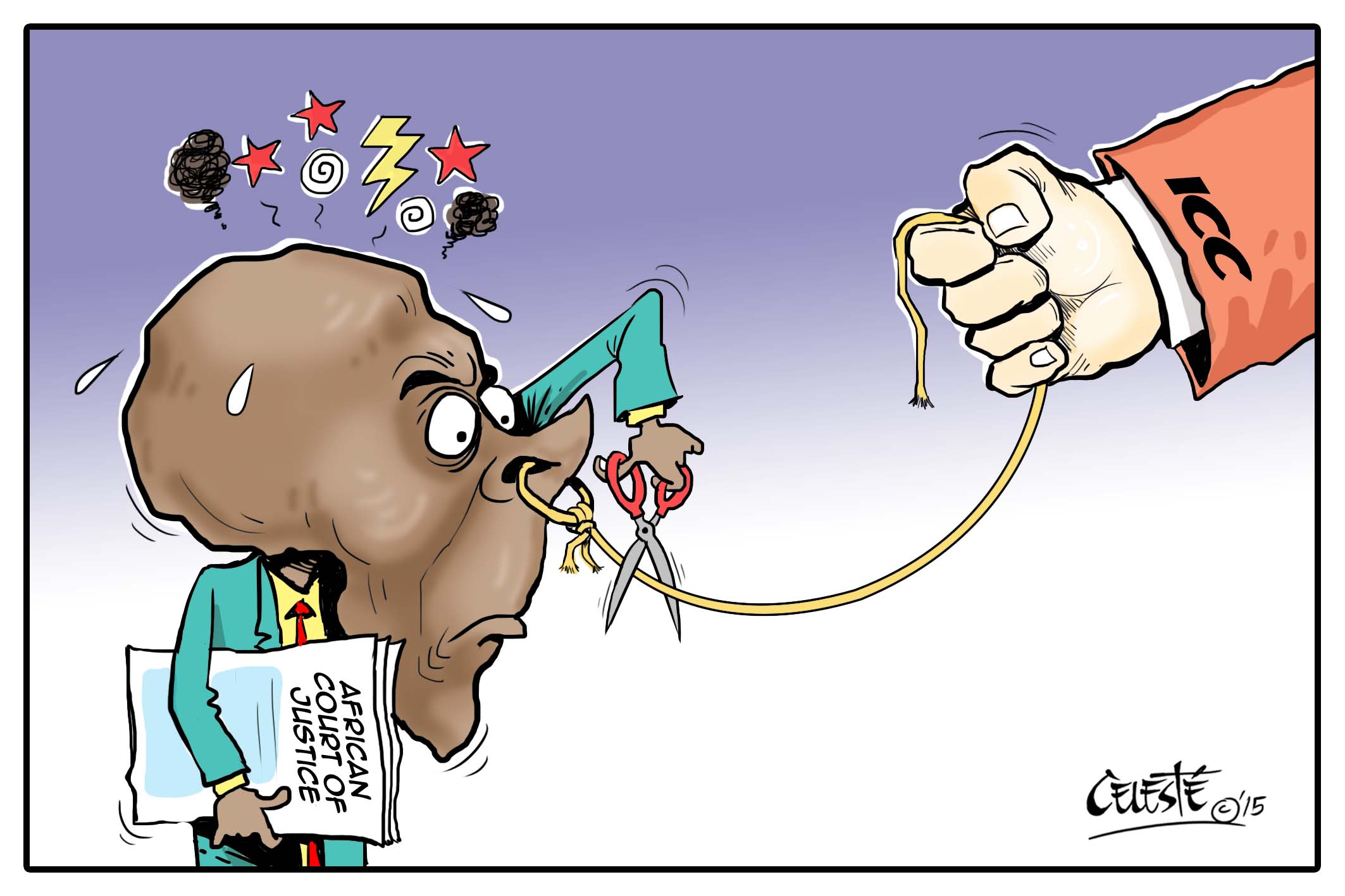
For more than two decades, the International Criminal Court (ICC) has been held up as the world’s answer to impunity, a court of last resort for the gravest crimes when national justice systems fail. But in Africa, where the ICC once found some of its strongest support, its legitimacy is once again being questioned.
In the span of two months, Burkina Faso, Mali, and Niger, which formed the Alliance of Sahel States (AES), and Chad have started their formal withdrawal process from the Rome Statute, the treaty that established the ICC. The first three Sahel states began the process in June 2026 after announcing their intention to leave in September 2025. At the time, they denounced the court as an “instrument of neo-colonial repression in the hands of imperialism”. In their joint declaration, the leaders stated that the ICC had proved “unable to address and try established war crimes, crimes against humanity, crimes of genocide, and crimes of aggression”.
Chad followed shortly afterwards, describing the court’s effectiveness and concentration in Africa as “limited and uneven”. In a statement on July 27, 2026, announcing the filing of its withdrawal notice with the UN Secretary-General, the Chadian government stated that of the 13 investigations opened by the ICC since it came into force in 2002, nine concern African states, as opposed to four opened in other regions of the world “but without any concrete progress”.
The criticism is not new. The African Union (AU) and several heads of state have in the past denounced the court as an institution that has mainly prosecuted African leaders. In 2017, the AU adopted an ICC withdrawal strategy, opening the door for a mass withdrawal of its member states from the Rome Statute, but the resolution was non-binding, with Nigeria and Senegal opposing it. South Africa and Burundi had already announced their planned withdrawal, accusing the ICC of undermining their sovereignty and unfairly targeting Africans. The ICC denied the allegations, insisting it was pursuing justice for victims of war crimes.
The Coalition for the ICC has warned that the current withdrawals could threaten victims’ access to justice and reparations. In its August 25, 2026, statement, it said: “Withdrawals not only create safe havens for ICC fugitives, they also increase the risks of war crimes, crimes against humanity, and genocide being committed with impunity on the territory of withdrawing states or by their nationals, gravely limiting the possibility of justice for victims. Furthermore, they undermine cooperation with the court, including access to victims and witnesses, and the arrest and surrender of alleged perpetrators.”
So far, only one African country has formally withdrawn from the Rome Statute – Burundi, in October 2017. South Africa and The Gambia revoked their withdrawal process in 2017 following domestic court rulings and new leadership, respectively.
The recently initiated departures are unfolding alongside a renewed American campaign against the ICC since the court issued arrest warrants in November 2024 for Israeli Prime Minister Benjamin Netanyahu and former Defence Minister Yoav Gallant.
US Secretary of State Marco Rubio has pledged to dismantle the ICC “brick by brick”, with Washington pressing other countries to reconsider their membership. Reports suggest that the pressure is reaching African countries, with the Chadian government having received such a request. In its July 2026 statement, it said the US Deputy Secretary of State for African Affairs had called its officials and asked them to reconsider the country’s ICC membership. “The American side expressed its concerns about the functioning of this institution and called on Chad to review its accession to the Rome Statute,” the statement said.
Chad may not have left because of Washington, but the Americans may be helping determine who leaves next.
For Chief Charles Taku, an international criminal lawyer who has worked across some of the world’s major international criminal courts and tribunals, the problem begins with the court itself.
ALSO READ: ASP to grapple with choice of new ICC prosecutor
Responding to questions from Journalists For Justice (JFJ), Chief Taku argued that the current withdrawals reflect a long-standing African complaint that the ICC has drifted from the objectives for which it was created and become vulnerable to political and economic pressure from powerful states. He said African states have long viewed the court as disproportionately focused on the continent, while overlooking the colonial contexts in which many conflicts occur.
“The ICC has ignored the fact that most atrocity crimes in Africa are committed within a colonial context and are not exclusively by Africans,” he said, adding that the AES states and Chad are at war against colonial-sponsored and exported terrorism.
Atrocity crimes in Africa
The withdrawals can also be read as part of a broader political realignment in the Sahel. Caroline Roussy, Senior Research Fellow and Head of the Africa/s Programme at the French Institute of International and Strategic Affairs (IRIS), said Burkina Faso, Mali, and Niger were continuing to redefine their relationship with institutions they regard as subservient to France and, more broadly, Western powers. However, in an article published by IRIS on July 23, 2026, she cautioned that this should not be interpreted as a desire for complete isolation, noting that the three countries remain members of several African organisations.
International law scholar Julien Antouly has questioned the extent of the argument of ICC bias in relation to Burkina Faso, Mali, or Niger, describing their accusation as “somewhat excessive” given that the court has not taken particularly hostile action against them.
Chief Taku linked the current withdrawals to the same concerns that drove the 2016 call for withdrawal crisis, arguing that African governments remain worried about double standards and the use of international justice as a tool of political intervention. “The complaints of Africa are fundamentally the same,” he said, adding that some governments fear that “a court which has lost its independence is a lethal colonial weapon of destabilisation and recolonisation”.
He cited the ACP–EU Cotonou Partnership Agreement, signed in 2000 between the European Union and 79 African, Caribbean, and Pacific countries, one of the major multilateral frameworks through which African states negotiated with their former colonial powers as sovereign parties. He argued that the EU attached what he described as a “condescending neo-colonial conditionality” to ICC membership through the Cotonou framework, saying this amounts to “economic political blackmail”.
He also pointed to the question of head-of-state immunity, which became a major point of confrontation in 2016 after the court issued an arrest warrant for then Sudanese President Omar Al Bashir. The United Nations Security Council (UNSC) had referred the Darfur situation to the ICC in 2005, and the court subsequently issued warrants for Bashir on charges including genocide, crimes against humanity, and war crimes.
The issue became particularly controversial in 2015, when Bashir travelled to South Africa to attend an AU summit. The South African authorities ignored the ICC’s request to arrest him. The ICC later found that South Africa had failed to comply with its obligations under the Rome Statute. The case exposed a legal and political question of whether a sitting head of state could be protected by immunity when an international court was seeking his arrest for international crimes.
The AU subsequently challenged the ICC’s interpretation, arguing that the court’s position had wider implications for African states and their obligations to one another. In 2018, the AU even submitted an amicus curiae brief in the separate Jordan appeal concerning Bashir, seeking greater clarity on the question of head-of-state immunity.
Chief Taku argued that the issue remains unresolved, although the immediate withdrawal threats of 2016 were eventually mitigated.
He noted that although the issue of head-of-state immunity has not been publicly presented as one of the reasons for the current wave of withdrawals by African states, “it is indeed an underlying reason underpinning the allegations of colonial and neo-colonial manipulations of the court to effect the removal of anti-colonial leaders in ICC States Parties in the continent”.
Manipulation of the court
There is another side to the story. According to Chief Taku, the ICC has increasingly moved beyond its early concentration on African situations and towards Europe and other parts of the world where atrocities under the court’s jurisdiction were committed. Under former Chief Prosecutor Karim Khan, the court pursued cases involving Palestine, Ukraine, Afghanistan, Sri Lanka/Bangladesh and the Philippines. He acknowledged that development, saying Khan made a “commendable effort” to move the court beyond Africa.
“He (Khan) also made credible attempts to make the principle of complementarity, which is a key objective of the Rome Statute, effective. Africa was encouraged by these measures. Africa has watched with concern the reaction of many Western state parties, erstwhile African colonial powers and non-state and member state superpowers, to the investigations in Europe and their spheres of influence or allies. These countries strongly supported the targeting of Africa and opposed head-of-state immunity only when it concerned Africa,” the counsel added.
The ICC’s confrontation with powerful states is not new. Roussy notes that several major powers, including the US, China, and Russia, three of the five permanent members of the UN Security Council, as well as Israel, are not parties to the Rome Statute. Its actions relating to Palestine, in particular, have generated intense opposition from the US and Israel, with Washington responding with sanctions against ICC officials. The court’s leadership has warned that the measures threaten international justice. The American campaign has now extended to urging allies and member nations to leave the Rome Statute and cut financial support to the court
Chief Taku believes some countries will respond to the pressure. In his assessment, the US campaign is broader than the withdrawal of individual states and forms part of an attempt to weaken the court itself.
As the debate on the withdrawal wave continues, it is important to take note of the fact that the African picture is not uniform. While the four African countries have initiated their withdrawal process at almost the same time, it is clearly not a mass rejection of the ICC on the continent. The four represent only about 12 per cent of the continent’s 33 ICC member states. The broader picture is, therefore, less sweeping than the recent wave might suggest. Roughly 60 per cent of Africa’s 55 countries are parties to the Rome Statute, with the majority remaining in the Assembly of States Parties (ASP). A 2024 record by the Bureau of the ASP shows that of its 21 members, five are African – Kenya, Senegal, Sierra Leone, South Africa, and Uganda. Burundi is the only African state to have completed its withdrawal, leaving the ICC in 2017.
Justice for the victims
However, the abandonment of the ICC raises important questions about justice for the victims of war crimes, crimes against humanity, and genocide. Chief Taku warned that the consequences could be serious. Without any prospects of accountability and justice, he argued, victims and communities may seek other forms of redress, including violence. “The proliferation of armed non-state actors, asymmetric violence, rebellions, and even terrorism may be traced to unaddressed historical wrongs and other forms of injustices,” he said.
For years, African leaders and legal scholars have discussed strengthening continental mechanisms rather than relying overwhelmingly on an institution headquartered in The Hague. The African Court on Human and Peoples’ Rights, or simply the African Court, this year marked two decades of existence, and its leadership has renewed calls for African governments to strengthen the institution.
The Malabo Protocol, adopted on June 27, 2014, seeks to give the African Court jurisdiction over a much broader range of international and transnational crimes than the ICC. Chief Taku pointed to it as a possible foundation for an African criminal court.
However, there is a fundamental problem: The Protocol is still to enter into force because it has not secured enough ratifications. Angola’s ratification in 2024 revived discussions around the proposal, but analysts continue to question whether the protocol, including its controversial provisions on immunity, can become a workable criminal justice system.
According to Chief Taku, what he terms “the unfolding new world order of ‘might is right’”, of impunity, of organisational racism, and politicisation of international justice may force Africa to face the reality of the situation and ratify the Malabo Protocol on the African Court to try international crimes on the continent.
Africa is facing an uncomfortable paradox. The continent is questioning an international court that it says has failed it, while at the same time there is no ready continental alternative. Leaving the ICC does not automatically create African justice. Instead, it creates a vacuum that African states are not yet prepared to fill.
Chief Taku pointed out that a genocide occurred in Darfur as Africa watched, and although the ICC is seised of the case, “it is still the responsibility of the AU, whose competent organ has investigated the matter, to ensure that perpetrators of genocide in Al-Geneina Al-Fasher are brought to justice, considering the monstrosity of the crimes”.
The responsibility of the AU
The debate over sovereignty, colonialism, and geopolitical influence can become highly theoretical. For victims, however, justice is much more concrete. After almost a decade of conflict, the legal debate has a human cost. Countries like Burkina Faso, Mali and Niger have millions of internally displaced people and thousands of victims of attacks by jihadist groups, as well as abuses attributed to security forces and Russian auxiliaries. Roussy’s questions are, therefore, more immediate than the diplomatic dispute: “Will the populations genuinely have access to justice tomorrow, whether national, regional or international? Will they be able to assert their rights? Will they be recognised as victims?”
Amnesty International warned that the withdrawals could deepen impunity and threaten victims’ access to “truth, justice and reparations”, according to Marceau Sivieude, Regional Director for West and Central Africa.
The ICC says its role is to prosecute individuals for genocide, crimes against humanity, war crimes and aggression when national systems are unable or unwilling to genuinely do so. This creates one of the central contradictions in Africa’s withdrawal debate
If the ICC is genuinely failing to provide equal justice, Africa has a legitimate reason to demand reform. But if countries withdraw without developing stronger domestic or continental mechanisms, who prosecutes the crimes that follow?
Chief Taku’s answer is that Africa may eventually have to build those mechanisms itself. He pointed to the Extraordinary African Chambers in Senegal, which prosecuted former Chadian president Hissène Habré, as evidence that African institutions can deliver international criminal justice.
The challenge is moving from individual successes to a permanent, adequately funded and genuinely independent continental system.
So far, there is no evidence of a continent-wide exodus from the Rome Statute. However, there is a widening argument over whether the ICC remains the best vehicle for justice in Africa.