

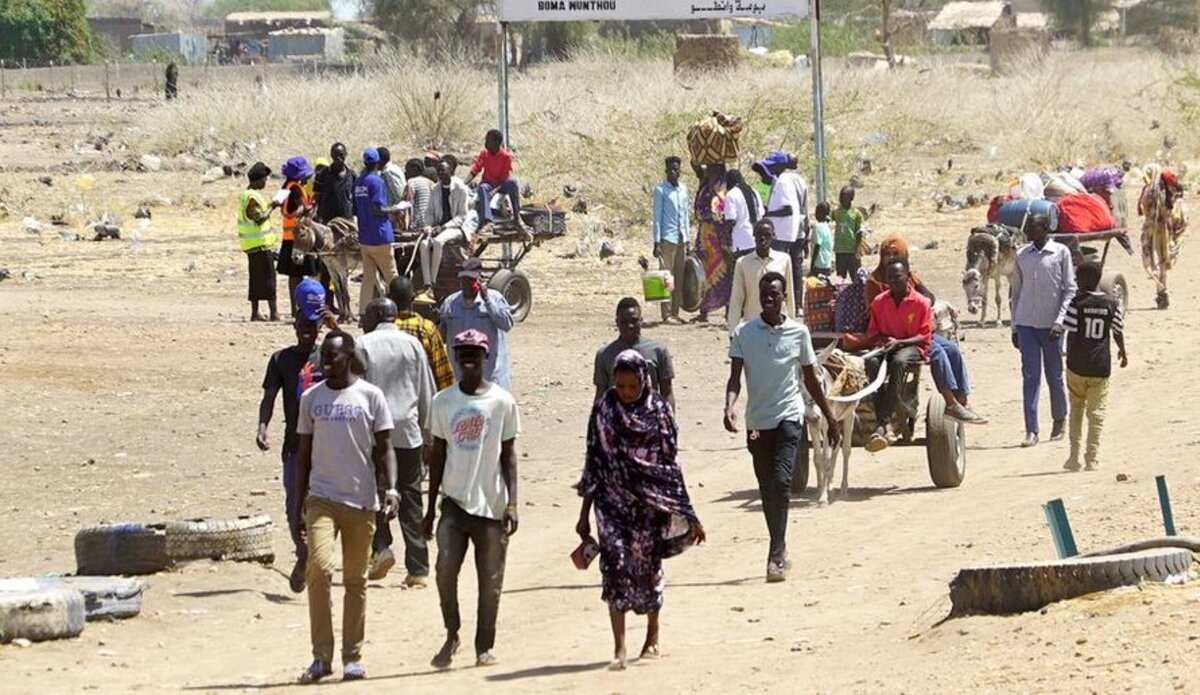
The conflict in South Sudan teetered on the brink of a full-blown civil war as civilians fled Akobo County in Jonglei state after the military ordered citizens, United Nations personnel, and humanitarian agencies to leave ahead of planned military operations in the area.
The government said the operation by the South Sudan People’s Defence Forces (SSPDF) was aimed at flushing out armed opposition groups that have recently expanded their control in parts of Jonglei, particularly forces linked to the South Sudan United Movement (SSUM) and breakaway factions of the Sudan People’s Liberation Army-In Opposition (SPLA-IO), which Juba has accused of attacking military positions and disrupting civilian movement.
The directive, which was issued on March 6 and expired on March 9, 2026, alarmed humanitarian organisations and foreign governments, which warned that the operation could expose hundreds of thousands of civilians to grave danger and trigger a major humanitarian crisis.
In a statement released on Monday, March 9, the United Nations Humanitarian Country Team (HCT) said it was “deeply concerned” by the order, noting that Akobo is currently sheltering an estimated 270,000 people, most of them displaced from neighbouring counties, including Uror, Nyirol, and parts of Ayod, following intercommunal clashes, cattle raids, and fighting between government forces and opposition groups since late 2025. Many fled after a surge in revenge attacks involving armed youth militias from the Lou Nuer and Murle communities, as well as skirmishes between government troops and SPLA-IO factions. Many of the displaced persons depend on humanitarian assistance to survive.
“Any military action in or around such a densely populated area would expose civilians to grave danger and risk triggering a catastrophic humanitarian crisis in Akobo County,” the HCT said. “We have already seen substantial cross-border flows of people into Ethiopia and received reports of looting in Akobo town.”
READ ALSO: Sudan’s forgotten war takes heavy toll on displaced citizens
According to humanitarian officials, more than half of the population in Akobo are women and children, including thousands displaced by renewed violence in Jonglei state since December 2025. The violence was driven by clashes between government forces and opposition fighters aligned with General Simon Gatwech Dual’s SPLA-IO Kitgwang faction, as well as localised communal fighting over resources, cattle, and territorial control. The conflict intensified after opposition forces seized several government posts in northern Jonglei, triggering a military response. In recent weeks, aid agencies have expanded life-saving assistance to meet the growing needs of displaced families and host communities.
The United Nations HCT warned that forcing civilians and aid workers to leave the area would severely disrupt that assistance at a time when needs are rapidly increasing.
“The HCT reiterates that civilians must never be targeted or forcibly displaced,” the statement said. “Any movement must be voluntary, safe and dignified, in full adherence to international humanitarian law, which strictly prohibits attacks on civilians and civilian infrastructure.”
Diplomatic pressure on the South Sudanese government is also mounting. In a joint letter dated March 9, the United States, the United Kingdom, and Norway, known collectively as the Troika, longtime supporters of South Sudan, urged President Salva Kiir Mayardit to revoke the military order.
“We strongly urge that this order be revoked,” wrote US Chargé d’Affaires Catherine Connell, UK Ambassador David Ashley, and Norwegian Ambassador Roar Haugsdal. “We fear that this order and threatened offensive, if implemented, will lead to further deaths, displacement, and suffering for the South Sudanese people.”
The diplomats noted that Akobo county hosts roughly 245,000 people, including thousands displaced from other parts of Jonglei, which saw escalating communal violence between the Lou Nuer, Dinka Bor and Murle communities; armed youth raids; and clashes between government forces and SPLA-IO factions disputing territorial control. These conflicts have repeatedly forced civilians to flee to safer towns such as Akobo. They emphasised that the presence of the UN peacekeeping mission in the area is essential to protecting civilians. The UN Mission in South Sudan (UNMISS), deployed in 2011 following the country’s independence in July that year to protect civilians under a Chapter VII mandate, plays a critical role in monitoring violence, deterring attacks, and providing safe zones for displaced populations. A military offensive in an area with the presence of UNMISS risks obstructing peacekeeping operations and compromising civilian protection efforts.
“We would note that the current UNMISS presence in Akobo is entirely consistent with, and necessary in order to fulfil its Chapter VII mandate from the United Nations Security Council to support peace and protect civilians,” the letter said.
The Troika representatives also pointed to recent diplomatic efforts aimed at reducing tensions in the country. They referenced President Kiir’s recent pledge to the UN Emergency Relief Coordinator to strengthen cooperation with the United Nations and allow unhindered humanitarian access across the country.
The UN human rights chief, Volker Turk, called for a ceasefire, saying some of the killings could amount to war crimes.
“Civilians are being brutally killed, injured and displaced on a daily basis across South Sudan as hostilities escalate between the army and opposition forces,” he said in a statement released in Geneva on Tuesday, March 10, 2026.
He urged the warring parties to resume dialogue and allow humanitarian aid to reach the affected civilians.
The appeal comes two weeks after the African Union called for an immediate ceasefire and inclusive dialogue to advance the implementation of the Revitalised Agreement on the Resolution of the Conflict in South Sudan (R-ARCSS). The R-ARCSS, signed in 2018, sought to end the civil war between forces loyal to President Kiir and those aligned with then-Vice President Riek Machar. Although the agreement led to a unity government, its implementation has been slow, and splinter rebel groups, along with unresolved ethnic tensions, have continued to fuel conflict.
ALSO READ: East Africa and the Horn: A region stretched by conflict and repression
“This is a call that we strongly support as the only path to peace,” the ambassadors wrote, adding that they had delivered the same message to all parties involved in the conflict. This includes the government forces, the SPLA-IO factions loyal to Machar, the Kitgwang breakaway groups, the SSUM, and the various armed community-based militias that have taken advantage of political fragmentation and local grievances.
According to humanitarian and aid agencies, Akobo has become a critical refuge for civilians fleeing violence elsewhere in Jonglei state. They warned that an escalation of fighting in the town could cause mass displacement and further destabilise the region, including neighbouring Ethiopia, where some refugees have already fled after crossing the border. Much of this movement is driven by ongoing clashes in northern and central Jonglei, where armed youth groups and rival political factions continue to fight over land, cattle, and political influence.
The UN Humanitarian Country Team urged all parties to avoid military action in populated areas and instead pursue dialogue to resolve their differences.
“The people of South Sudan need peace,” the statement said.
The military order extended a government counteroffensive launched in January and dubbed Operation Enduring Peace. It targeted opposition forces, including SPLA-IO dissident factions and SSUM elements, which began seizing government positions in December 2025. They were challenging the government’s authority in northern Jonglei, sparking a broad military response that has escalated the humanitarian crisis. The operation has since displaced more than 280,000 people across Jonglei state.