
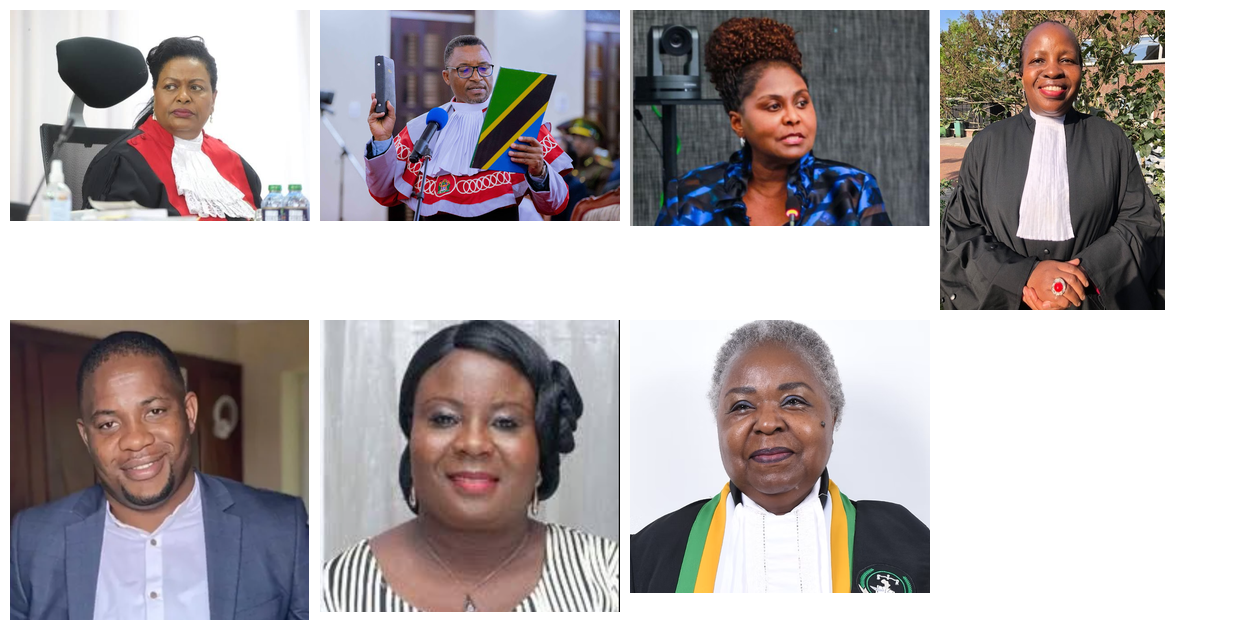
Women dominate the list of African candidates to fill six vacancies on the bench of the International Criminal Court (ICC) for the 2027–2036 term. Five of the eight African countries that have decided to enter the race have nominated women for the election expected to take place during the 25th session of the Assembly of States Parties (ASP), to be held at the United Nations headquarters in New York from December 7 to 17, 2026.
The five women are Kenya’s Supreme Court Justice Njoki Ndung’u, Uganda’s Rosette Muzigo-Morrison, Ghana’s Evelyn Ankumah, The Gambia’s Justice Veronic Wright, and Malawi’s Justice Tujilane Chizumila.
The other African candidates are Senegal’s Abdoulaye Seye, Tanzania’s Justice Deo John Nangela, and the Democratic Republic of the Congo’s Ezéchiel Amani Cirimwami.
The eight Africans are among 14 candidates vying for the six vacancies. Four of the candidates are on List A, whose members are nominated on the basis of established competence in criminal law and procedure, while the other four are List B candidates, nominated for their expertise in international law, including human rights and humanitarian law.
The other nominees for the six ICC vacancies are Mette Knudsen of Denmark, Lev Kyshakevych of Ukraine, Guénaël Mettraux of Switzerland, and Yoshimitsu Yamauchi of Japan on List A; and Diana Carolina Olarte Bácares of Colombia and Ana Peyró Llopis of Spain.
The 14 candidates hope to replace Tomoko Akane of Japan, who is also the current President of the court; Rosario Salvatore Aitala of Italy; Reine Alapini-Gansou of Benin; Luz del Carmen Ibanez Carranza of Peru, and also the First Vice-President of the ICC; Solomy Balungi Bossa of Uganda; and Kimberly Prost of Canada. The six judges have served since March 2018, and their nine-year, non-renewable terms will end in March 2027.
According to Coalition for the International Criminal Court (CICC), in addition to the qualifications listed for the candidates, when selecting judges, the “ICC States Parties shall also take into account the need for the representation of the principal legal systems of the world, equitable geographical representation, and a fair representation of female and male judges.
“ICC states parties shall also consider the need to elect judges with legal expertise on specific issues, including, but not limited to, violence against women or children.”
The delegates from the ASP will choose from among candidates from the five different regions to fill the six vacancies on the 18-member bench for nine-year terms beginning in March 2027. The regions are the African States, the Asia-Pacific States, the Western European and other States, the Latin American and Caribbean States, and the Eastern Europe States.
Kenya’s nomination of Justice Ndung’u has drawn scrutiny at home, with questions raised about the country’s broader strategy in the upcoming international judicial elections. Prominent Nairobi lawyer Ahmednasir Abdullahi questioned Kenya’s game plan, asking whether the state has overreached by simultaneously backing Justice Ndung’u for the ICC and Judge Phoebe Okowa for a full term on the International Court of Justice (ICJ), elections that fall within the same diplomatic cycle.
On November 12, 2025, the United Nations General Assembly (UNGA) and the UN Security Council (UNSC) elected Kenya’s Okowa as a member of the ICJ to replace Judge Abdulqawi A. Yusuf. The judge, who was also the President of the court, resigned effective September 30, 2025. Judge Okowa, the first Kenyan to be elected to the ICJ, is expected to serve for the remainder of his term, which was due to expire on February 5, 2027.
In January 2026, Kenya formally launched Judge Okowa’s candidature for election to a full nine-year term for the 2027–2036 period, with the elections scheduled during the 81st Session of the UNGA and the Security Council in November 2026. At the time, Kenya pledged to seek support for her candidature among UN member states.
“Kenya knows it doesn’t have the leverage or political gravitas on the international plane to have two judges in the ICJ and ICC,” Abdullahi warned, adding: “Of the two good ladies, who is being set up for failure and why?”
The picture is further complicated by the other nominations from the other two East African candidates – Tanzania and Uganda – which could divide regional diplomatic support rather than consolidate it behind a single candidate.
In their profiles outlined below, all the eight African nominees detail extensive work on sexual and gender-based violence in conflict and post-conflict settings, an area specifically recognised under Article 36(8)(b) of the Rome Statute, which requires that States Parties take into account “the need for judges with legal expertise on specific issues, including, but not limited to, violence against women or children”.
Kenya: Njoki Ndung’u (List A)
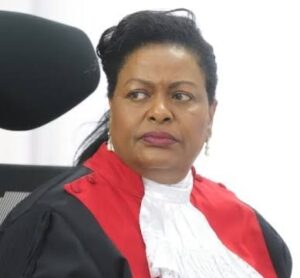 Kenya’s nomination note describes Justice Ndung’u, 60, as the “architect” of the Sexual Offences Act 2006. As a member of Kenya’s Parliament between 2003 and 2007, she moved the motion for the legislation’s adoption, for the ratification of the Great Lakes Region Protocol on the Prevention and Suppression of Sexual Violence Against Women and Children, and for key human rights amendments to the Refugee Act 2004. The United Nations named her Person of the Year in Kenya in 2006, the same year the International Commission of Jurists (ICJ) named her Jurist of the Year.
Between 1989 and 1993, Justice Ndung’u served as State Counsel in the office of Kenya’s Director of Public Prosecutions, handling capital cases including murder and robbery with violence before magistrates’ courts, the High Court, and the Court of Appeal. Since her appointment to the Supreme Court in 2011, she has engaged in precedent-setting interpretation of fair trial rights, evidentiary standards, and the legality of criminal convictions.
According to the nomination, Justice Ndung’u brings a prosecutor’s understanding of evidence, a legislator’s appreciation for how law functions in practice, and a judge’s experience weighing the rights of accused persons against survivor-centred justice. She also served on the Committee of Experts that redesigned Kenya’s constitutional framework after the 2008 post-election crisis, which first brought Kenya into the ICC’s orbit with the failed trial of four of its citizens.
Uganda: Rosette Muzigo-Morrison (List B)
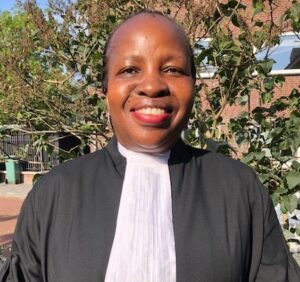
When Rosette Muzigo-Morrison, now 62, arrived in Kigali in July 1995 as part of the prosecution team for the International Criminal Tribunal for Rwanda (ICTR), she was entering a court applying international criminal law to prosecute genocide and crimes against humanity in real time. By December 1996, she had established what her CV repeatedly describes as “the first ever” Witnesses and Victims Protection and Support Unit in international criminal justice. She spoke at a side event at the Rome Conference on safeguards to be included in the Rome Statute.
As an investigator at the ICTR, she was part of the pioneer prosecution team in Prosecutor v. Jean Paul Akayesu – the first case to convict rape as an element of genocide and served on the first sexual violence committee for the prosecution of gender-based crimes.
In 2016, she brought that expertise to the ICC’s Office of the Prosecutor, serving until 2021 as Legal Adviser and Operations Officer, coordinating policies on sexual and gender-based crimes and managing field operations in seven situations. She remains on the Justice Rapid Response roster and led investigations for the UN Commission of Inquiry on Libya, and trained Polish and Ukrainian investigators on prosecuting sexual and gender-based crimes in 2023, 2024, and 2025.
Uganda states that Muzigo-Morrison “has made remarkable contributions to strengthening international justice systems, including through sustained initiatives promoting gender-sensitive and victim-centred justice”.
Ghana: Evelyn Ankumah (List B)
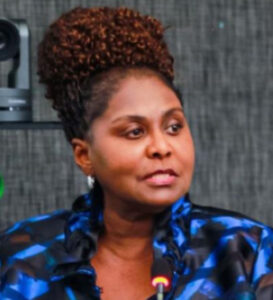
Evelyn Ankumah, 61, has spent nearly three decades shaping how Africa engages with international criminal justice. She founded Africa Legal Aid (AFLA) in 1997 and, in February 2025, was appointed Special Adviser to the Office of the ICC Prosecutor.
Ankumah convened the Review of the Kampala Amendments on the Crime of Aggression, mobilising African States Parties to engage in the reform of international criminal law, and contributed African perspectives to the first public meeting of the Crimes Against Humanity Initiative in 2009 alongside judges and scholars who helped to draft a model treaty. She is the Coordinator of the Gender Mentoring Training Programme for Judges of International Courts and Tribunals, and her advocacy is credited as a driving force in the establishment of the International Criminal Court Bar Association. She also initiated the preparation and adoption of the Cairo-Arusha Principles on Universal Jurisdiction.
Between 1990 and 1993, she served as a research fellow at Maastricht University, authoring the first monograph on the African Commission on Human and Peoples’ Rights. She holds a Juris Doctor from William Mitchell College of Law and has authored and edited six books and over 40 editions of the AFLA Quarterly journal.
Ghana’s note verbale states that her engagements “reflect strong competence in international adjudication, judicial reasoning, and institutional leadership”.
The Gambia: Veronic Wright (List A)
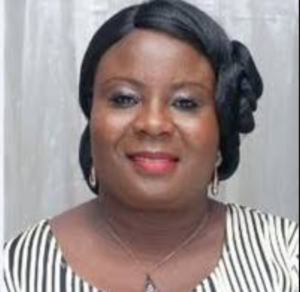 Justice Veronic Wright, 58, currently serves as Justice of Appeal of The Gambia and sits as Acting Justice on the Supreme Court. She brings 35 years of legal experience spanning national and international criminal justice.
Her CV states that she is her country’s Judiciary representative on transitional justice matters and serves on The Gambia-ECOWAS Joint Technical Committee on the Establishment of a Hybrid Court for The Gambia. She headed the sub-committee that drafted the Statute of the Special Tribunal for The Gambia, which will try crimes against humanity committed between 1994 and 2017, and worked with the ECOWAS Commission of experts on the establishing decision.
Between 2005 and 2009, Wright served as a trial attorney at the ICTR, prosecuting genocide and crimes against humanity, including sexual assault as a crime of genocide, as team lead in Prosecutor v. Rukundo. From 2017 to 2018, she was Senior Legal Officer and Officer-in-Charge of the Office of the Prosecutor at the International Residual Mechanism for Criminal Tribunals, where she reviewed case files and initiated contempt proceedings against individuals attempting to influence prosecution witnesses.
Between 2019 and 2020, she headed the Sexual and Gender-Based Crimes and Crimes against Children Unit at the UN Investigative Team on Accountability for ISIS crimes in Iraq, leading investigations with a view to building cases against senior perpetrators.
Senegal: Abdoulaye Seye (List B)
Abdoulaye Seye, 58, is currently the head of the Unified Team and a senior trial lawyer at the ICC’s Office of the Prosecutor, leading investigations in the situation in the State of Palestine, including the proceedings that produced the arrest warrants in that situation, and in the Mali situation. He has worked at international criminal tribunals for over 25 years, including 13 years at the ICC.
Between August 2020 and March 2021, Seye led the special multidisciplinary team at the International Residual Mechanism handling the case of Félicien Kabuga, reviewing voluminous case files, preparing investigation plans, and amending the indictment to include sexual violence crimes. From 2001 to 2013, he served at the ICTR as appeals counsel and senior appeals counsel, handling high-level genocide cases at the Appeals Chamber.
According to his CV, he regularly trains judges, prosecutors, and judicial police officers in African countries on investigating and prosecuting international crimes, with training modules used across similar programmes. Seye works in both French and English, the ICC’s two working languages.
Tanzania: Deo John Nangela (List A)
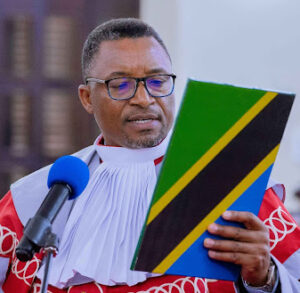 Dr Deo John Nangela, 54, has served as Justice of the Court of Appeal of Tanzania since January 2025. He brings over 25 years of experience as a prosecutor, judge, academic, and judicial administrator.
At the Court of Appeal, he determines appeals involving murder, sexual and gender-based violence, organised crime, financial crimes, and human rights. From November 2023 to January 2025, he served as Judge-in-Charge of the High Court at Sumbawanga, presiding over complex criminal trials and mentoring junior judges and magistrates.
From 2012 to 2019, he directed the Compliance Division at Tanzania’s Fair Competition Commission as Chief Legal Counsel, leading investigations into corporate misconduct and transnational economic crimes and prosecuting approximately 48 cases before the commission and the Court of Appeal. In 2008, he served as Special Prosecutor at the Directorate of Public Prosecutions, leading trials related to money laundering, gender-based violence, and murder, including appellate cases involving atrocities against persons with albinism.
Between 2002 and 2012, Dr Nangela taught international criminal law, human rights law, criminal procedure, and law of evidence at the University of Dar es Salaam. He holds a PhD from the University of Cape Town and an LLM in Public International Law from SOAS, University of London.
Malawi: Tujilane Chizumila (List A)
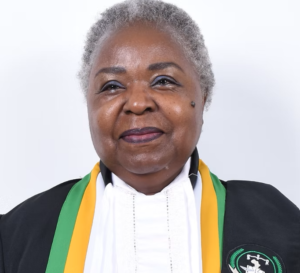 Justice Tujilane Rose Chizumila, 72, has served since 2017 as a judge of the African Court on Human and Peoples’ Rights. She brings nearly 50 years of legal experience and a personal history as a former refugee, which uniquely informs her judicial perspective.
During nine years on the African Court, Justice Chizumila has adjudicated cases involving due process, political rights, freedom of expression, and gender-based discrimination and violence, including the landmark APDF & IHRDA v. Republic of Mali decision strengthening protections against child marriage, recognised through the Gender Justice Uncovered Awards.
Her career spans over 20 years of criminal litigation: 10 years as a criminal defence counsel with the Tanzania Legal Corporation (1978-1988), state prosecution and legal aid work at Malawi’s Ministry of Justice, and founding Chizumila & Company, the first legal practice in Malawi established by a female lawyer, in 1994. From 2003 to 2004, she served as a judge of the High Court of Malawi.
Between 1999 and 2003, she served as Malawi’s ambassador to Zimbabwe and permanent representative to SADC, co-organising the Zimbabwe All-Stakeholders Inter-Party Conference in 2001. Her earlier humanitarian work included serving as an officer for refugee women and children at UNHCR, addressing gender-based violence in refugee settings and family tracing for separated children.
From 2010 to 2015, Justice Chizumila served as Malawi’s first female Public Ombudsman, investigating abuses of public authority and serving by constitutional mandate on the Human Rights Commission and Police Service Commission.
Malawi’s nomination states that her lived experience as a former refugee “enhances her judicial sensitivity and reinforces her commitment to justice for victims of the most serious crimes of concern to the international community.
Democratic Republic of Congo: Ezéchiel Amani Cirimwami (List B)
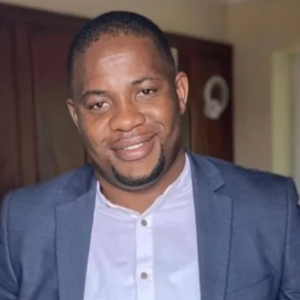 Ezéchiel Amani Cirimwami, 41, brings an unusually layered profile to the election: a career that spans criminal prosecution and adjudication in the Democratic Republic of the Congo, active litigation before international courts, and sustained academic scholarship in international criminal law. He holds dual doctorates, awarded simultaneously in January 2023 by the Université Catholique de Louvain and the Vrije Universiteit Brussel, on the obligation to extradite or prosecute perpetrators of international crimes. Since September 2024, he has held a professorship in international law at the Vrije Universiteit Brussel.
His domestic judicial career began in 2009 when he joined the DRC’s Judicial Service Commission as Deputy Public Prosecutor, a role he held until 2016. From March 2016 to June 2023, he served as a High Court Judge, presiding over complex civil and criminal cases. He returned to the prosecution service in June 2023 as Public Prosecutor, where he currently leads the prosecution service at the jurisdictional level, overseeing investigations, directing deputy prosecutors, and representing the state before national courts. The DRC’s nomination notes that, although he is put forward under List B, his record as judge and prosecutor gives him direct grounding in criminal procedure and evidentiary standards of the kind central to the ICC’s work.
In parallel, Cirimwami has built an active international litigation practice representing the DRC as State Counsel before three major international courts. Since 2023, he has been the lead counsel in Case No. 007/2023, Democratic Republic of the Congo v. Rwanda, the first inter-state application before the African Court on Human and Peoples’ Rights, where he presented oral arguments and secured favourable rulings on preliminary objections. He has simultaneously served as State Counsel at the International Court of Justice in advisory proceedings on climate change, and at the International Tribunal for the Law of the Sea in the COSIS advisory opinion on climate change and international law. More recently, he joined the DRC’s representation in The Gambia v. Myanmar proceedings at the ICJ, relating to obligations under the Genocide Convention, as counsel on behalf of the DRC’s declaration of intervention.
Between 2019 and 2023, he was a Research Fellow at the Max Planck Institute Luxembourg for International, European and Regulatory Procedural Law, where he monitored and analysed jurisprudence from the ICC, ICJ, ITLOS, and regional human rights courts and contributed entries to the Max Planck Encyclopedia of International Procedural Law, of which he remains an Associate Editor. In 2023, he represented the DRC as Plenipotentiary Delegate at the Ljubljana Diplomatic Conference and served on the Legal Drafting Committee that finalised the Ljubljana–The Hague Convention on International Cooperation in the Investigation and Prosecution of Genocide, Crimes against Humanity, and War Crimes. His published monograph on the aut dedere aut judicare obligation appeared with Bruylant in 2025.
The DRC’s nomination states that Cirimwami’s “experience, competence and integrity” will allow him to contribute to the Court’s work on complex cases involving questions of evidence and procedure and reaffirms the DRC’s commitment to the Rome Statute system and to independent, impartial, and effective international criminal justice.